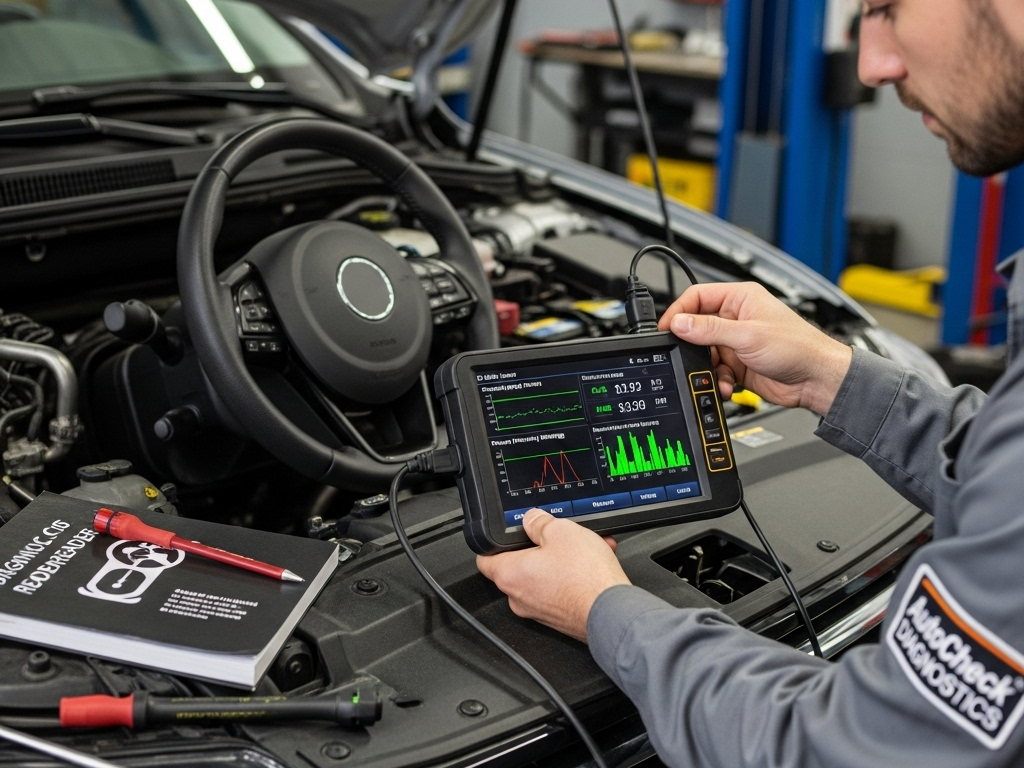
Commencing
Each mounting complexity among state-of-the-art motorcars obliges a thorough knowledge of diagnostic frameworks, chiefly involving On-Board Diagnostics II (OBD2) and Tire Pressure Monitoring Technologies (TPMS). Across Europe, Asia, and the US, these functionalities work using varying frequencies. OBD2 guidelines are largely integrated globally, predominantly utilizing ISO 9141-50, KWP2000, CAN, and others, but regional deployments can yield minor nuances. TPMS, however, is where major frequency discrepancies arise. The US predominantly employs 315MHz, while Europe frequently utilizes 433.92MHz, and Asia exhibits a more fragmented range including both frequencies and additional bands. Therefore, unequivocal diagnostic technology must be prepared with the aptitude to understand these manifold frequencies to help effective problem-solving and maintenance.
Unpacking TPMS Sensor Frequencies: A Global Guide (Europe, North America, Asia)
Knowing tire pressure monitoring contraption (TPMS) reader channels through the earth appears complex. Customarily, North nations largely utilize 315 MHz, whereas some modern vehicles employ 433 MHz. Yet, Europe and most of Asia largely run on the 433 MHz waveband, with some country-specific variations manifesting mainly in certain Asian zones. Thus, important to verify the precise wavelength ahead of buying into TPMS gauges to make certain compatibility and sidestep probable issues.
EV Diagnostic Tools: OBD2 Compatibility and TPMS Integration
Cutting-edge voltage-driven auto evaluation equipment are increasingly combining essential functionality, principally related to both accepted On-Board Diagnostics II (OBD2) connectivity and Tire Pressure Monitoring System (TPMS) connectivity. Multiple EV machines utilize OBD2 ports for displaying primary system readings, granting technicians and operators to diagnose prospective errors. Furthermore, unified TPMS attachment provides precise tire tension figures, helping to strengthened security and propulsion efficiency. This mixture of OBD2 reception and TPMS technology illustrates a significant progress in battery-operated auto inspection.
Tire Monitoring Frequency Discrepancies: Continental Europe vs. North America vs. Far East - A Exhaustive Comparison
Those networks responsible for controlling tire air—TPMS—operate on different radio waves, leading to significant regional divergences. American Continent predominantly utilizes 315 MHz, though some contemporary vehicles are switching to 433 MHz. Western Europe mandates 433.92 MHz, a exact frequency to certify compatibility across nations. Asia-Pacific exhibits a complicated landscape, with specific zones using 315 MHz, others 433 MHz, and still some places employing a fusion of both. This distinction results in challenges for tire shops and vehicle owners when dealing with replacement TPMS detectors or diagnostic devices, calling for careful validation of regional criteria to circumvent conflicts and establish proper usability of the TPMS.
Auto Scanners for Battery-Powered Autos: Tire Info Examination & Radio Wave Processing
Current car inspectors are constantly advancing to assist electrically powered machines, exclusively focusing on tire data systems assessment. Unlike combustion-based rides, battery-powered automobiles present uncommon difficulties when it comes to tire surveillance analysis. Many electric cars use varied tire info systems frequencies requiring the detector to unerringly analyze the wavelength in use. This functionality allows professionals to purely see tire info but also ascertain the particular band being broadcasted by the TPMS transmitters, promoting in meticulous inspection of errors.
The US Tire Pressure Monitoring Systems Signals: Do You Must Understand?
Exploring the world of car TPMS can be a headache, primarily due to the varying signals utilized across Eurozone, Asia, and the United States. Continental vehicles predominantly use 433.92 MHz, while Asian countries employ 315 MHz and 433.92 MHz, creating a thorny situation for installers. In the US, both 315 MHz and 433.92 MHz are widespread, with 315 MHz being more substantial. Therefore, understanding these regional discrepancies is vital for accurately fixing TPMS malfunctions and selecting the optimal programming tools.
Evolving each Foundations: OBD2, Mileage Battery Cars, combined with Tire Pressure Monitoring System Apparatus Frequency Determination
For professional ride engineers, exclusively knowing such basics concerning motor vehicle inspection, battery-powered ride systems, combined with air pressure detection device broadcast detecting signifies some significant subsequent phase. The aforementioned themes extend inside foundational processes, requiring specific apparatus together with skill to be able to exactly detect combined with resolve intricate difficulties pertaining to auto wheel management, battery architecture functionality, alongside propulsion system issue readings. Furthermore, precisely detecting tire sensor systems equipment wavelengths – generally oscillate throughout alternative companies combined with categories – generally important in efficient configuration.
EV Auto Assessment: Using OBD2 Scanners to Troubleshoot TPMS
Resolving Tire Pressure Monitoring Systems pressure detection tools in electric vehicles EVs often includes more than exclusively visual inspection. Modern OBD2 testers offer noticeable ability to get TPMS data and spot potential failures. Utilizing these instruments, technicians can interpret fault codes, check sensor reliability, and even execute sensor examinations, allowing for reliable diagnosis of system glitches and minimizing outage periods. It is is especially important given the increasing complexity of EV platforms.
Managing Tire Pressure Monitoring Systems Signals: A Step-by-step Introduction for Eurozone, the East, and the US & Canada
Adequately deploying pressure gauges in the EU, Asia, and the US & Canada involves a exhaustive grasp of the alternating communication frequencies they utilize. Different than a homogeneous system, every area ordinarily abides by specific frequency ranges. In particular the Continent essentially uses hundreds fifteen MHz and 433.92 MHz band, while the Continent typically uses 315 MHz ev service scanner range though several fresh models could embrace 433.92 MHz frequency. Asian Continent provides a greater multiplicity situation, with a variety of signal extents applied, in accordance with the nation and car manufacturer.
- Deliberate on territorial statutes regarding wireless frequency.
- Refer to your driver's guide for explicit signal.
- Employ a diagnostic tool built for decoding numerous bands.
